In Appreciation of Studio Ghibli
Powerful stories, scenes, and dialogue from film are more than entertainment pieces. They become signposts and memory markers as we associate a film’s impact to whatever is happening in our own lives.
In particular, the wonder and genius of the animated films from Studio Ghibli have become signposts for many writers at Christ and Pop Culture. Here they share their appreciation for Studio Ghibli films.
My Neighbor Totoro | Kevin McLenithan
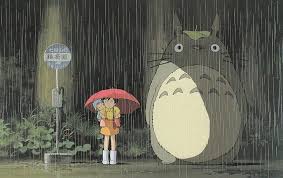
We think we know what’s going to happen in My Neighbor Totoro from the moment its basic premise becomes clear. Two young girls move out of the city with their parents in the hope that their seriously ill mother will have a better chance of recovery in a countryside hospital. Anyone who’s familiar with the tropes of the endangered-parent fairy tale knows that Mom’s chances of survival aren’t good. The conventional three-act screenplay practically writes itself.
But Studio Ghibli made its name on gently subverting expectations of what an animated film can be, thanks in great part to Hayao Miyazaki’s sure hand in crafting films like My Neighbor Totoro. Miyazaki does not focus on marching a plot forward or achieving dramatic payoffs. His movie is childlike in the best possible sense of the word—it luxuriates in the present. The girls explore and quarrel, giggle and worry; the endearingly strange forest spirit Totoro pops up here and there like a feral Aslan. As we grow up, we learn to treat our experiences as stones with which we construct narratives for our lives, but My Neighbor Totoro reminds us that we didn’t always think of life that way. When we are children, each successive moment forms not a plot but a trail of breadcrumbs. Watching Miyazaki’s films reminds us what it is like to follow those breadcrumbs, not knowing or particularly caring where the trail ends up. We simply follow the crumbs as they appear before us, with each moment an entire reality unto itself.
The Secret World of Arrietty | Geoffrey Reiter
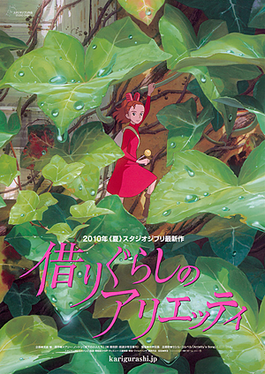
I love watching movies in the theater—my first childhood memory is seeing the Rankin and Bass rendition of The Last Unicorn. However, I tend to be very reticent in taking my own children to see movies (yes, I am totally that overprotective parent at times) because once they experience something (good or ill), it can’t be undone. So choosing my children’s first big-screen movie experience is a big deal for me. My daughter was 4 years old when The Secret World of Arrietty was released in the States, and we had been reading Mary Norton’s Borrowers books as a family, so at last, I held my breath and took her.
She can be sensitive, so we had to stand outside the theater during the trailers for fast-paced CGI previews. After that, there was real magic sitting with her, watching a film that is in many ways about a father-daughter relationship. I suppose I understand the complaint of some that Arrietty is slow-moving, but it was a perfect pace for her, and her eyes were wide at times when director Yonebayashi and his animators emphasized the immense differences of scale between Arrietty’s world and the realm of the human “beans.” I’m grateful, because Studio Ghibli gave my daughter—and me—exactly the first-movie experience I had been praying for.
Ponyo | Nathaniel Valle
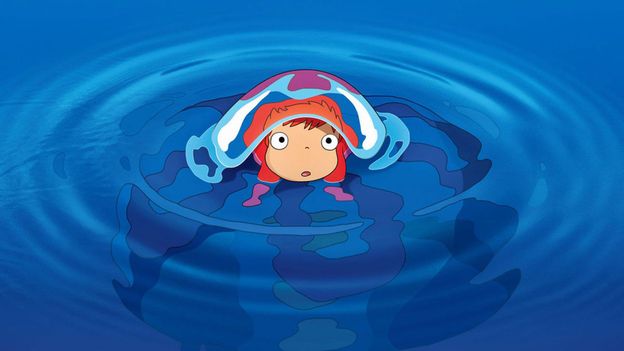
Ponyo is a beautiful film, even by Studio Ghibli standards. The premise certainly occupies that special space of Ghibli magical realism: a magical goldfish transforms into a human and then the world is flooded as result of her seeming hubris. As a loose interpretation of Hans Christian Anderson’s The Little Mermaid, it manages to craft its own loving version while incorporating Ghibli’s longstanding thematic focus of restoring the balance between humanity and nature.
But calling it just a fairy tale would be an injustice; at its heart, the film is about a relationship between a young boy and young girl, and how bringing together worlds long-divided can bring us closer to a childlike sense of wonder. When the world floods, there’s no sense of divine retribution. Instead, we’re treated to a nautical narrative filled with creatures and a sense of innocence that may be unmatched in the studio’s catalogue. As a result, the film’s detractors claim it is Studio Ghibli’s simplest creation. Yet when the film ends and the balance between the worlds is restored, we see a community accept the wonder of children and learn it’s often the youngest among us who see goodness and love in all creatures (even in the smallest of goldfish).


Leave a Reply